

There is a moment that a lot of ADHD Christians know well. You’re sitting in church, the service is underway, and you become aware of the person near you. Their Bible is open. Their notes are neat. They seem to be receiving something you’re not.
And quietly, the comparison starts. Why does this come naturally to them? If my faith was as genuine as theirs, surely it would look more like that.
This is the comparison trap. And for ADHD believers it is a particularly cruel one, because the comparison is almost always made against a standard your brain was never built to meet.


The comparison was never fair
The trap works like this. You observe someone else’s outward practice, their consistency, their stillness, their apparent ease, and measure your interior experience against it. You are comparing your inside to their outside.
The comparison assumes there is one way a genuine faith life should look, built around the gifts most visible in a gathered setting. The person who recalls the right verse instantly, who follows the sermon without effort, whose prayer comes fluently. Those are real and valuable gifts, rightly cherished. But for many ADHD believers, the precise recall those gifts require is something working memory makes genuinely harder. The difficulty is neurological, not spiritual.
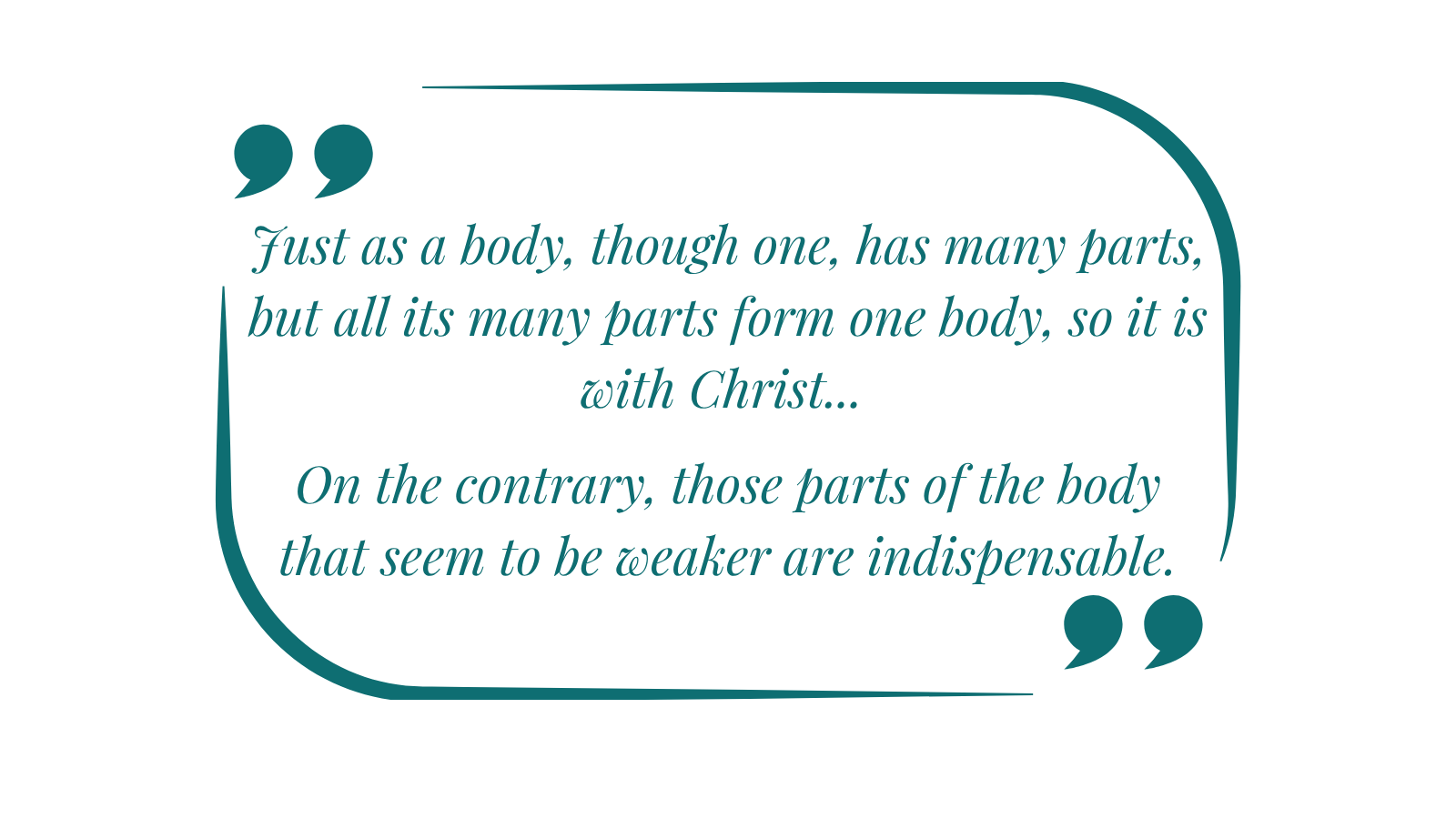
Paul’s image is a body. One body, many parts, each necessary, each doing something the others cannot. Not tolerated. Indispensable. Think of a hospital. Without the porters, cleaners, booking clerks and secretaries, the ward closes just as completely as it would without the surgeons. None of those roles is a deficient version of the doctor. Each is essential to the same purpose.
The comparison trap is not just psychologically harmful. It is theologically mistaken. You were never supposed to be them.
What your part looks like
This is the question the comparison trap never lets you ask. Not, why can’t I do what they do? But, what does my part of the body actually look like?
For some it is intensity, a wholehearted passion for the things of God that doesn’t know how to be lukewarm. For others creativity, making unexpected connections, finding angles others miss. For others a quality of welcome, the attentiveness to the person sitting alone, the ability to make someone feel genuinely seen. And for many, a constant returning prayer, scattered but persistent, oriented toward God throughout the ordinary hours of the day. Paul calls it praying without ceasing. Many ADHD believers practise it without realising that is what it is.
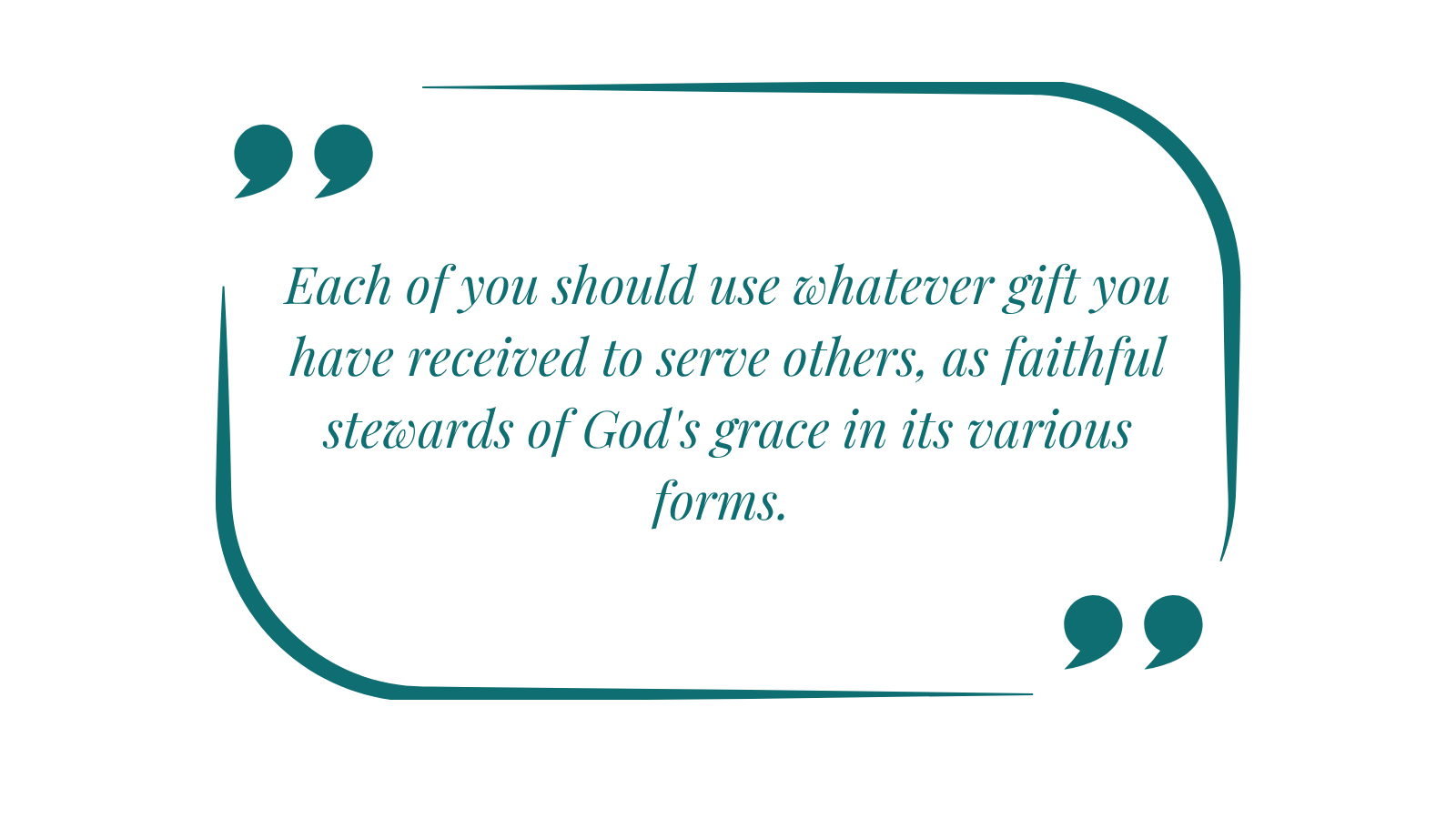
These are examples, not a complete list. Hear that word in 1 Peter 4:10. Various. The grace of God expresses itself through different people, different minds, different kinds of attention and love and service. Whatever your form, it is not a lesser form. And the body needs it.
Reflect
Who do you tend to compare your faith to, and what standard does that comparison assume? Are there ways your mind engages with God that you have been dismissing as failure, that might actually be your particular form of faithfulness?
Respond
The next time the comparison starts, name it as a trap and ask the question it never lets you ask: What part of the body am I? and what would it mean to steward that faithfully rather than apologise for it?
Pray
Heavenly Father,
Forgive me for the times I have measured myself against others and concluded I was less.
Help me to understand that you placed me in this body deliberately, with this mind, this wiring, this particular and unrepeatable way of reaching toward you.
Not as a compromise. As a design. Give me the courage to inhabit it fully and without apology.
In Jesus’ name,
Amen.


Want to go deeper?
This devotional has a companion podcast episode. Find it at ADHDBibleStudy.com or search ADHD Bible Study on your podcast platform.
Devotionals – Seen: The Comparison Trap (1 Corinthians 12:12, 1 Corinthians 12:22 & 1 Peter 4:10)
This content has been made available under a Creative Commons licence and may be freely shared and printed for personal or pastoral use.
ADHDBibleStudy.com should be credited and it may not be used commercially or adapted without permission. Please contact us if you would like to do either.