
Introduction
Some Christians understand ADHD within the framework of the fall, that all human suffering, illness and neurological difference is a consequence of a broken creation and will be fully redeemed in the new creation. This is a coherent and serious theological position. It does not diminish the value or the belovedness of ADHD believers — it simply locates neurodivergence within the broader narrative of creation, fall, redemption and restoration.
Others understand ADHD as a deliberate aspect of God’s creative design, that some minds are specifically made this way for specific purposes, that the diversity of human neurological experience reflects the creative intention of a God who makes nothing by accident. This too is a coherent and serious theological position, and it finds resonance in Psalm 139 and in the extraordinary ways ADHD minds have shaped human history and the life of faith.
I am not going to take sides in that debate. It is a secondary, perhaps tertiary, theological question, and serious Christians hold different views on it with genuine integrity. It is also an area where more careful theological thought is needed and the conversation is still developing. What I want to say is this — whatever your view on the origin of ADHD, whatever you believe about what our bodies and brains will look like in the new creation, it does not change the most important thing about your situation right now.
God is sovereign. His grace is supreme. You are loved as you are, in this body, with this brain, in this life. That is not a consolation prize for the unanswered questions. It is the foundation on which everything else rests.
However you were made, and whatever you will become, you are his. And that is enough.
The resurrection body
Since I have raised the question of the new creation, it is worth pausing briefly — because ADHD believers sometimes ask this quietly and deserve an honest response.
Will I still have ADHD in the resurrection? The honest answer is that I don’t know. None of us does.
The New Testament gives us tantalising glimpses of the resurrection body, physical but transformed, continuous with who we are but glorified, recognisable and yet beyond our current categories. What it does not give us is a detailed neurological specification.
Different theological traditions answer the question differently. Some emphasise restoration — the new creation will be free from all the effects of the fall, including neurological difference. Others emphasise transformation — we will be fully ourselves, but fully redeemed, which may look very different from either our current experience or a simple neurotypical default. Others are honestly agnostic — we simply don’t know enough to say.
What I want to gently suggest is that this question, interesting as it is, is not the most important one for how you live your faith now. The God who will raise you is the same God who is present with you today. The grace that will perfect you then is the same grace that receives you now. However that future unfolds, it does not change what is true in the present — that you are known, loved and used by God exactly as you are.
The resurrection question deserves more theological attention than it has received. But it is a question for the future. The present has enough grace of its own.
A word about medication
I want to say this clearly and without apology.
ADHD is a neurological condition. It has a biological basis, it is well documented in the scientific literature and for many people it responds well to medication. The decision about whether to pursue pharmaceutical treatment is a deeply personal one — involving the individual, their clinician, their circumstances and their own sense of what is right for them. That decision belongs to the person and their doctor. It does not belong to their church.
Unfortunately some parts of the church have not understood this. There are Christian communities that have discouraged or actively pressured believers away from ADHD medication — framing it as a lack of faith, a failure to trust God or an unnecessary interference with how God made them. There are communities that have treated ADHD itself as something to be prayed away or spiritually overcome rather than neurologically understood and appropriately supported. This is pastorally harmful and theologically mistaken. It has caused real damage to real people — delaying diagnosis, deepening shame and leaving believers without support they both needed and deserved.
I want to be explicit — placing undue pressure on someone to take or to abstain from medication is ethically wrong. Pastoral and spiritual reflection is a legitimate part of any significant decision in the Christian life. But it does not override medical autonomy. The person living in this brain gets to decide what support they need for it.
On a personal note, this site may not exist were it not for the clarity and focus that medication has brought to my life. That is not an advertisement for medication and it is not a claim that everyone should or will have the same experience. Medication does not work for everyone and is not appropriate for everyone. But it has been, for me, part of how God has provided the capacity to do this work. If you are considering medication, or reconsidering it, the right conversation is with your GP or psychiatrist, not primarily with your small group leader.
Take the spiritual dimension seriously. But trust your clinician with the clinical decision.

Reframe your past
Now that you understand your ADHD, or are beginning to, I want to invite you to look back at your faith history with different eyes.
The reading plans that fell apart. The prayers that wandered. The sermons that lost you. The quiet times that were anything but quiet. The recurring shame of not being able to sustain the spiritual disciplines that everyone around you seemed to manage without effort.
What if those were never evidence of weak faith at all? What if they were evidence of a brain trying to access God through doors that were never built for it, and finding faith anyway, in spite of the mismatch, because the faith was genuine even when the form didn’t fit?
The faith that persisted through all of that, through the failed plans and the wandering prayers and the church services you struggled through and the seasons of burnout and the moments of genuine doubt, is not weak faith. It is extraordinarily resilient faith. It kept finding its way toward God in a system that was not designed for it.
That is not failure. That is faithfulness.
Your ADHD did not diminish your faith. In ways you may not yet fully see, it may have deepened it, forcing a dependence on grace that more naturally ordered minds can sometimes avoid, cultivating an honesty before God that performance-based spirituality never requires, producing the kind of passionate intensity that encounters God in ways that careful, measured engagement sometimes misses.
You have been on a faith journey with ADHD all along. You just didn’t always have the right map.
ADHD traits in the Bible
The categories we use to understand ADHD today did not exist in biblical times. It would be inappropriate — and frankly unnecessary — to retrospectively diagnose the figures of Scripture with a modern clinical framework.
But patterns are patterns. And the intensity, driven purpose, emotional depth, impulsivity, passionate advocacy and capacity for extraordinary focused engagement often associated with ADHD are not new features of the human mind. They have always been there.
Looking at the biblical narrative with that recognition, certain figures stand out with a kind of familiarity that I find genuinely comforting.

David: Poet, musician, warrior, king. Intensely creative and intensely emotional, capable of extraordinary acts of courage and extraordinary acts of moral failure, swinging between anguish and praise within a single Psalm.
The man after God’s own heart was not a man of measured, ordered spiritual consistency. He was a man of passionate, scattered, returning, wholehearted devotion — and God called him beloved.

Jeremiah: The most emotionally intense of the prophets. Unable to stop speaking even when he desperately wanted to.
His words in Jeremiah 20:7-9 “there is in my heart as it were a burning fire shut up in my bones, I am weary with holding it in and I cannot” are one of the most striking descriptions of compulsive driven intensity in all of Scripture.
His was not a tidy, managed prophetic ministry. It was consuming, costly and utterly unable to be contained.
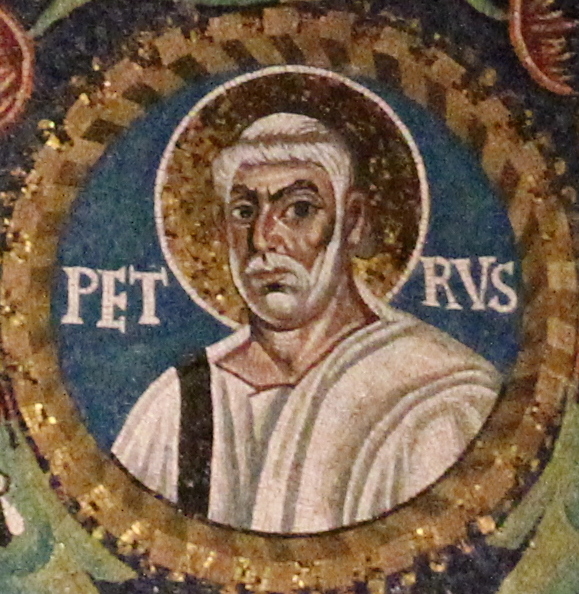
Peter: The most immediately recognisable of the disciples for anyone who knows what impulsivity feels like.
He jumps out of boats. He cuts off ears. He speaks before he thinks and acts before he considers consequences. He fails spectacularly and is restored with extraordinary tenderness.
His story is not one of steady reliable discipleship. It is one of passionate, impulsive, wholehearted following — and Jesus chose him, named him, and built his church on him
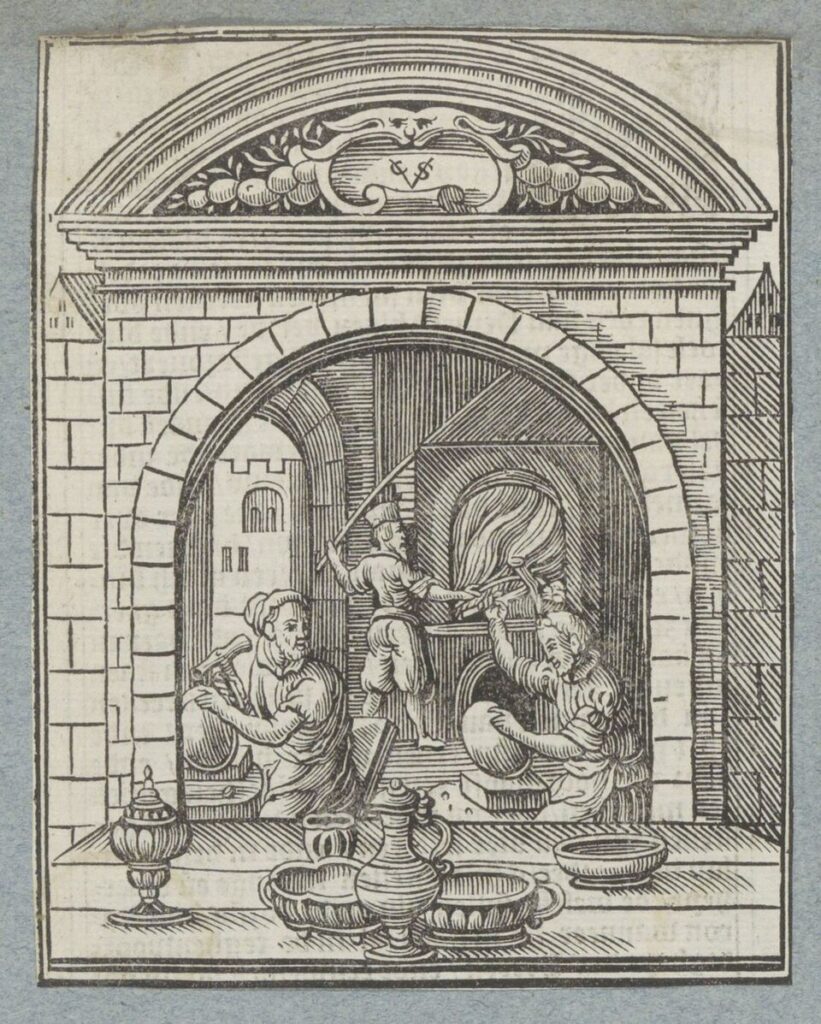
Bezalel: Perhaps the most theologically significant figure for ADHD believers, and one of the least well known.
In Exodus 35, God fills Bezalel with his Spirit and he becomes completely absorbed in the intricate holy work of building the tabernacle, losing himself in creative engagement directed toward God.
This is the Bible’s own picture of intense absorbed creative focus as a Spirit-given gift for holy purpose. Not a symptom to be managed. A gift to be released.
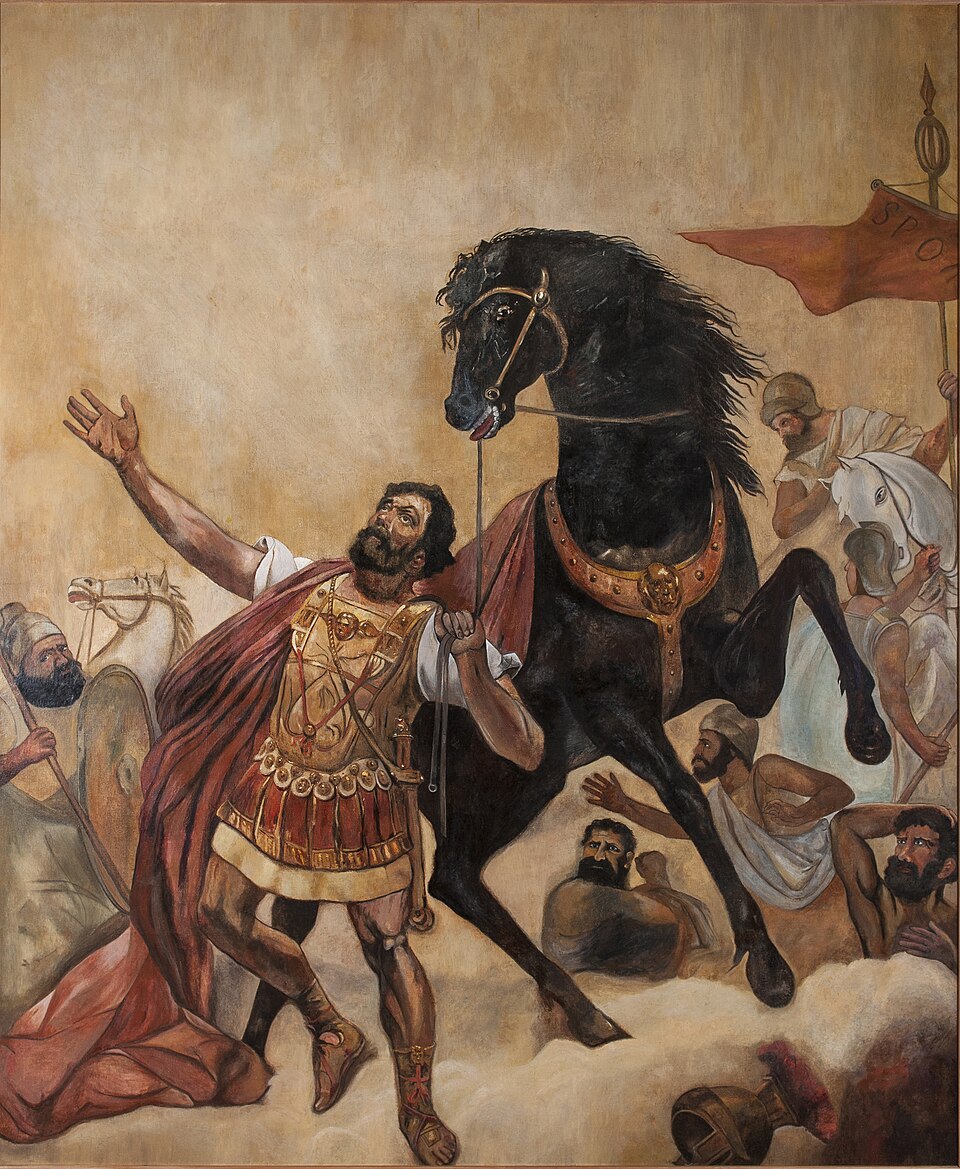
Paul: If any figure in the biblical narrative resonates with the ADHD experience it is Paul. The intensity.
The driven, relentless, hyperfocused purpose. The extraordinary capacity for sustained intellectual output. The impulsivity. The transformation at Damascus, not a change of character but the same intensity redirected, the same fire burning in a different direction.
The catalogue of sufferings in 2 Corinthians 11:23-28 that reads almost compulsively, as though he cannot stop listing them. “The I press on” of Philippians 3, unable to rest, unable to stop, always pushing toward the goal.
Some scholars have noted these resonances in Paul’s life and writing. I make no clinical claim. But as a believer I find genuine comfort in that association.
The man whose letters form the theological backbone of the New Testament, whose account of justification by faith shaped the Reformation, whose missionary journeys carried the gospel across the known world, this man whose mind burned with the intensity and drive and passionate purpose was used by God to change the world.
Your mind is not a liability to the kingdom. It may be one of its great assets.
The gifts your brain carries
The church has been slow to name what ADHD brings to the life of faith. I want to name some of it.
- Intensity: The capacity to care deeply, to feel things fully, to bring passion and wholehearted engagement to what matters. Faith is not a mild preference for many ADHD believers. It is a consuming fire. That intensity, rightly directed, is one of the most powerful forces in the kingdom of God.
- Creativity: The ADHD mind makes connections that more linear thinking misses and finds unexpected pathways. It can generate ideas at a rate that is overwhelming, but also extraordinary. The church needs creative minds. It always has.
- The constant returning prayer: I have written about this in the prayer guide, but it bears repeating here. Research into ADHD believers has found that many describe a spirituality of constant conversational dialogue with God; a scattered but persistent orientation toward the divine. This may come closer to the biblical call to pray without ceasing than more structured forms of prayer. What looks like an inability to sustain formal prayer may actually be a different and deeply biblical form of it.
- Resilience: a lifetime of navigating a world not designed for your brain builds a particular kind of resilience and a particular kind of empathy. ADHD believers often have extraordinary compassion for others who are struggling — because they know what it is to struggle and to keep going anyway.
- Honesty: The ADHD mind is often constitutionally unable to perform a faith it doesn’t feel. That can be painful. It can also be a gift, because it means that when the faith is real, it is genuinely real. Not performed, not maintained for social reasons, but alive and honest and present.
HolyFocus – the gift I’d never trade
And then there is hyperfocus.
I want to talk about this separately and with the weight it deserves — because of all the gifts the ADHD mind carries, this is the one that has most profoundly shaped my faith, my ministry and my understanding of what it means to encounter God.
Hyperfocus is the ADHD brain’s capacity for total, absorbed, intense engagement with something that captures its attention. Time disappears. Distraction falls away. The normal scattered quality of ADHD attention gives way to something that feels like its complete opposite — a state of complete immersion, extraordinary depth, and creative or intellectual engagement that can sustain for hours without effort.
For neurotypical people this may sound like simply being interested in something. It is not. It is categorically different, an intensity of focus that most people never experience and may find difficult to fully imagine. It is also, I should be honest, something that requires care. It can lead to forgetting to eat, forgetting to sleep, losing track of time in ways that need managing with appropriate self-care and boundaries. The crash that sometimes follows a period of intense hyperfocus is real and worth being prepared for.
But when it is directed toward God — when the ADHD mind enters that state in the context of prayer or Scripture or creative ministry or theological reflection — something remarkable happens.



I have written elsewhere in this guide about the Bible and about prayer. There are times when a passage of Scripture catches and I find myself hours later still in it — following cross references, reading commentaries, tracing themes, praying through what I am finding — completely absorbed, completely present, completely alive to God in a way that is difficult to describe and impossible to manufacture.
There are times in prayer when the same thing happens — when the conversation with God that begins as a few scattered sentences becomes an intense, sustained, deeply personal encounter that leaves me changed. These experiences are not things I could have produced through discipline or technique. They arrived, as hyperfocus arrives, unbidden, intense and utterly genuine.
Much of this site was created during exactly those periods. The theological ideas, the pastoral guides, the research that underpins it all — these emerged in hours of intense absorbed engagement that felt less like work and more like the kind of experience Bezalel must have known in Exodus 35, when the Spirit of God filled him and he became completely absorbed in holy creative work.
I have come to believe that this is not accidental. That the ADHD mind’s capacity for hyperfocus — when directed toward God — is not a symptom to be managed but a contemplative gift that the church has never named or theologically examined. I have given it a name: HolyFocus. And I am in the process of writing a hypothesis about what hyperfocus might mean for our understanding of how human beings encounter God, and what the church may be missing by not recognising it. That research is still developing and it is far from a finished argument. But I offer the concept here because I believe it matters — not just academically but personally and pastorally. If you have experienced what I am describing — the intense absorbed engagement with God that hyperfocus can produce — I want you to know that it has a name that it is not a lesser form of spiritual experience. It may be one of the most profound.
And here is the thing I want to say most directly of all — the thing that comes from the deepest place in my own experience of faith with ADHD.
For all the struggles. For all the times the prayer wouldn’t come and the Bible wouldn’t open and the church service was lost and the burnout arrived and the faith felt distant and my hands literally could not open Scripture. For all the seasons where God carried me when I could not carry myself.
I would not swap any of it if it meant losing this.
The moments of intense hyperfocused encounter with God — in Scripture, in prayer, in the creative work of building something for his kingdom — have brought me more personal and spiritual growth than I can measure. They have given me experiences of God that I could not have accessed any other way.
They are, I believe, part of how God made me, part of how he reaches me, part of the specific and unrepeatable way that this particular ADHD mind was designed to know him.
I do not know what your hyperfocus looks like or where it takes you. I do not know whether it arrives in Scripture or in prayer or in creative work or in some other form entirely. But if you have felt it — if you know that intensity, that absorption, that sense of being completely present to something beyond yourself — I want to say this.
That is a gift. Thank God for it. It is yours in a way that most people will never fully understand. And in the economy of the kingdom, it may be worth more than you know.
Spiritual gifts
1 Corinthians 12 describes the body of Christ as a community of diverse gifts, different members, different functions, all necessary, none dispensable. The eye cannot say to the hand, I don’t need you. The head cannot say to the feet, I don’t need you.
ADHD minds are part of that body. Their gifts are part of what the body needs to function as it should. A church that has structurally excluded or marginalised neurodivergent believers has not just failed those believers — it has impoverished itself. It is missing parts of the body it was designed to include.
In practice, these gifts may look very different, but each one belongs in the life of the church.



What a flourishing faith looks like
It does not look like a neurotypical faith finally achieved.
It does not look like the quiet time sustained every morning, the Bible read systematically from Genesis to Revelation, the sermon absorbed without a wandering thought, the prayer life ordered and consistent and productive.
It looks like faith that works with your brain rather than against it. Prayer that moves — on walks, in cars, in the middle of ordinary life; constant, conversational and honest. Scripture engaged with in bursts of genuine fire rather than careful daily increments. Worship that uses the body as well as the mind. Community found in smaller, more interactive spaces as well as or instead of large formal gatherings. Spiritual practices chosen for genuine fit rather than cultural expectation.
It looks like grace received rather than performance sustained. A relationship with God built on who he is and who you are rather than on what you can consistently produce. A faith that has survived the burnout and the doubt and the failed plans and the wandering prayers — and is still here, still reaching toward God, still real.
It looks, in other words, exactly like your faith. The one you have been living all along, imperfectly and honestly and with everything you have. That faith is not a lesser version of the real thing. It is the real thing. Yours, particular, embodied, ADHD and all — and received by the God who made you, loves you and has been present in every scattered, returning moment of it.
A final thought
Paul wrote in Philippians 4:11 “I have learned in whatever state I am to be content.” That contentment was not passive resignation amid his own extremes of abundance and need, clarity and limitation. It was the hard-won peace of someone whose mind and body knew enough turbulence to prove God’s presence in all of it — the plenty and the need, the clarity and the confusion, the seasons of extraordinary fruitfulness and the seasons of exhausted silence.
You are on that same journey with your ADHD-wired brain — not waiting for a ‘better’ version of yourself, but learning contentment now in the neurological reality God has given. You have not arrived, none of us has. But you are on the way, with a faith that is real and a God who has never once looked at you and seen a mistake.
Go and be who he made you to be.
This content has been made available under a Creative Commons licence and may be freely shared and printed for personal or pastoral use.
ADHDBibleStudy.com should be credited and it may not be used commercially or adapted without permission. Please contact us if you would like to do either.