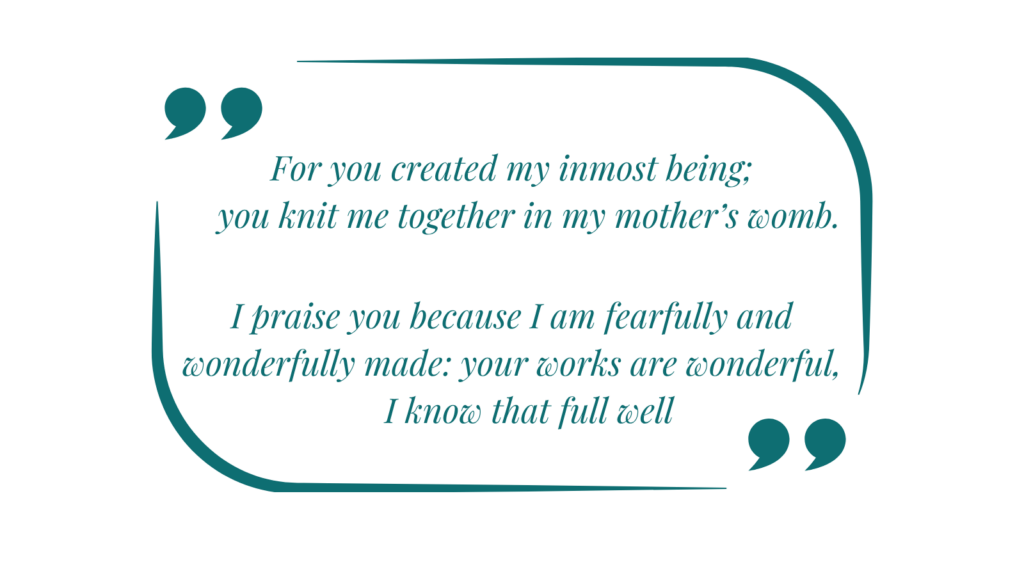
Fearfully and Wonderfully Made
Guest contribution
Towards the beginning of 2026, at the age of 45, I completed an assessment for an adult ADHD diagnosis and received confirmation that I have Combined Inattentive/Hyperactive ADHD, the most common type.
Then, in May of the same year, I was also assessed for autism and again, it was confirmed that I met the criteria for a formal diagnosis, with both conditions having always been present, but never being recognised.
This is a great thing.
In the past, when I didn’t know God had wired my brain differently, I felt broken and confused and suffered greatly with depression. I spent a lot of my life being told I needed to try harder, was too loud, too much. I didn’t understand why God would make me this way, and it was so hard to feel so different and unable to be normal. I also struggled with the fact that, despite repeatedly seeking help, taking anti-depressants as prescribed and going to therapy whenever I was referred, nothing seemed to be working and I still wasn’t “getting better”.
Coming to the realisation that I had ADHD and autism (AuDHD, as the combination is sometimes called) was life-changing. I wasn’t broken. I was just wired differently. And it was God who did the wiring — so it clearly wasn’t a fault. It was a choice.
I don’t need to be healed from an illness. I am not ill. While I am looking forward to how the medication I have recently started might help me manage the daily challenges of a world not built for my brain, the core of who I am is not a mistake. I just needed to understand what was different about the way I looked at the world, and learn how to lean into what worked for me so I could be more productive.
It is sad that I missed out on the right support during my formative years and into adulthood. At times I wished I didn’t exist. But God has a way of redeeming our deepest pains; that experience allowed me to resonate better with others and grow into the person I am today. He was always there with me during those difficult times, even when I was too caught up in my grief to realise it.
Now I can be more patient and empathetic to those who also see the world differently.
In an ideal world, medication wouldn’t be needed. We would live in community — with a partner, close family or friends — who would support us in establishing routines and doing the tasks that we aren’t able to, whilst we do the things that come naturally to us. I believe this is the ecosystem of humanity that God intended when he created us with such variation in our skills and abilities. In that world, we would all be accepting of each other, working to our best abilities, not expecting others to be able to do exactly the same as us.
We don’t yet live in that world. So God, in his goodness, has allowed the development of medications and treatments that can support us to live better lives — though nothing will compare to what he offers us in the new creation.
So will I still be neurodivergent in the new creation?
Yes. Because being neurodivergent is not an illness. It is a deliberate design choice by our Heavenly Father — just like the deliberate design choices he made in the patterns on a butterfly’s wings.
In the meantime, I urge you to look with compassion on those of us who seem to struggle with things that seem easy to you. We’re not stupid, lazy or broken — and we thrive when we’re in the right environment.
How can we build that environment together?
- Ask, don’t assume: Ask your neurodivergent friends or colleagues what they need and how they work best.
- Value the variation: Look for the strengths in our “wiring” rather than just the struggles.
- Lean on the Spirit: If you’re the one struggling, lean on the Spirit for strength and guidance. It is within you.
By seeking to understand one another, we can all thrive and be more empowered to serve each other — and most importantly, God.
© 2026 Hayley J Bacon