
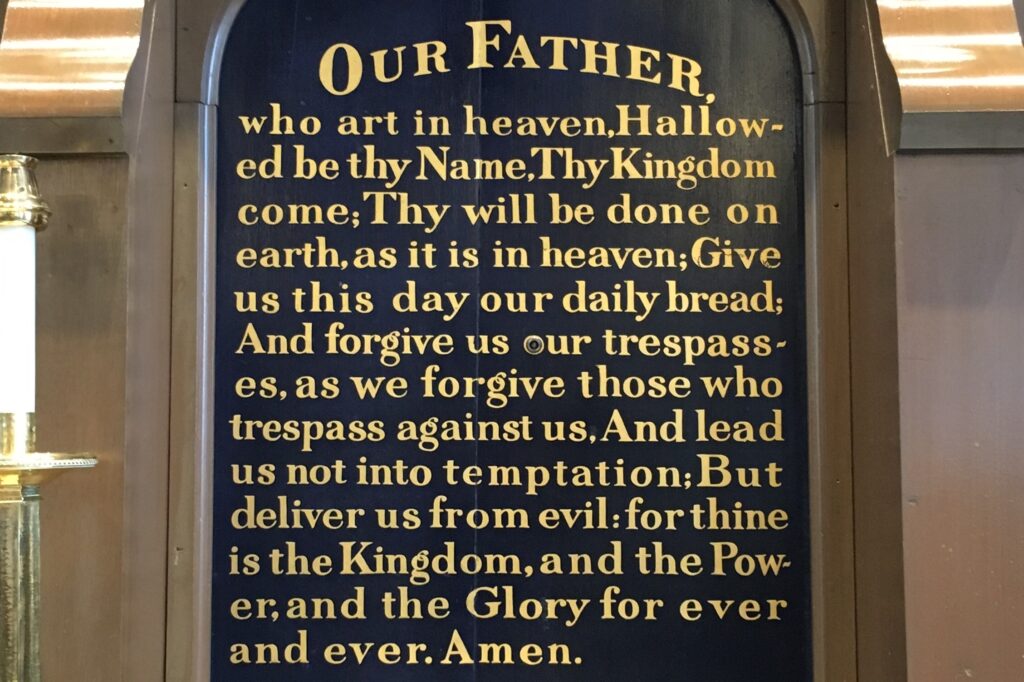
Our Father, which art in heaven, hallowed be thy name. Thy kingdom come, thy will be done, on earth as it is in heaven. Give us this day our daily bread. And forgive us our trespasses, as we forgive those who trespass against us. And lead us not into temptation, but deliver us from evil.
Matthew 6:9-13 (Book of Common Prayer, 1662)
The Lord’s Prayer
The disciples watched Jesus pray and saw something in the way he prayed that they didn’t have and knew they needed. So they asked him directly. Lord, teach us to pray.
He didn’t give them a method. He didn’t give them a reading plan or a set of disciplines to master. He gave them a prayer, and told them to use that.
For most of Christian history this exact prayer has been said daily, in homes, churches, hospital beds and in the last conscious moments of people’s lives. It has outlasted every translation, every tradition, every attempt to replace or improve it. The words have changed slightly across the centuries but the prayer has not.
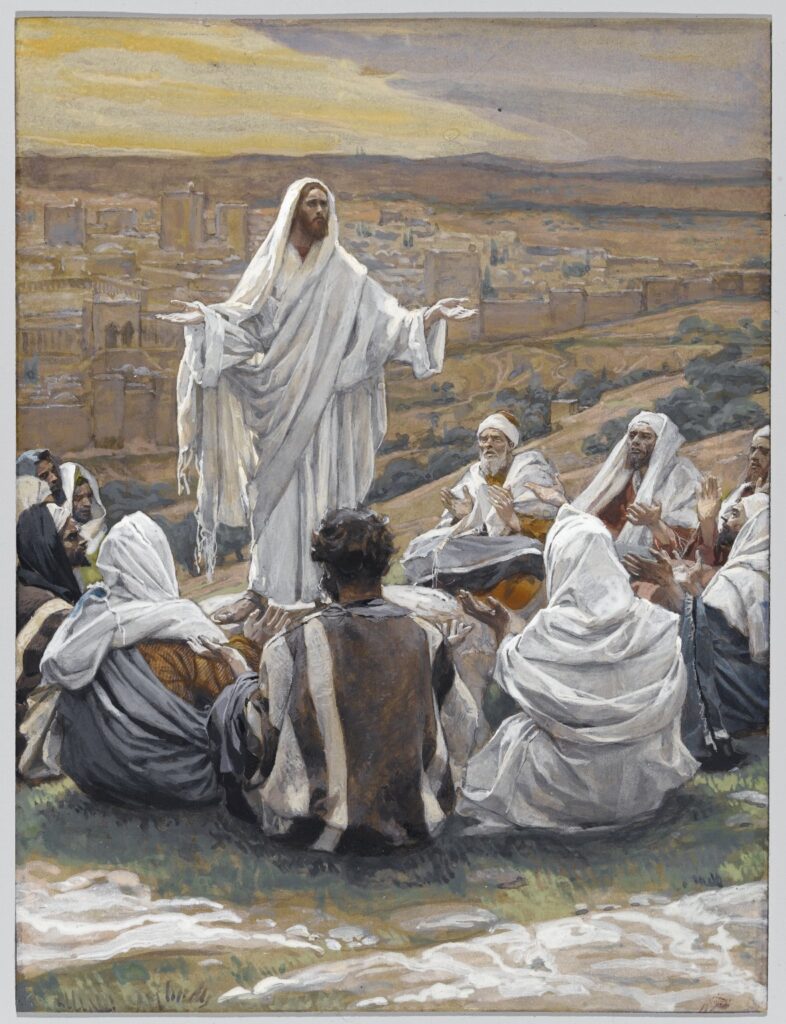
The foundation of Christian prayer
Jesus didn’t intend this as the only prayer we would ever pray. The Psalms are raw and searching. Paul’s letters overflow with intercession. Gethsemane is as anguished and personal as prayer gets. But the Lord’s Prayer was given as a template and much of the structured prayer the church has produced across two thousand years follows its shape, whether consciously or not.
Not a ceiling — a foundation.
And what a foundation. It opens with adoration, the simple acknowledgement of who God is before anything else is said. Then surrender — thy kingdom come, thy will be done — not my agenda, not my timeline.
Then something quietly remarkable: give us this day our daily bread. Not next week’s provision. Today. The immediate, the ordinary need brought straight to God without dressing it up. Then forgiveness, the only movement that carries a condition, worth sitting with. And finally protection, an honest acknowledgement that we are not equal to everything that comes at us.
Adoration, surrender, provision, forgiveness, protection. Everything the praying heart needs. Covered within just sixty words..
Built for the imperfect mind — proven by history
For most of the history of the church, most Christians didn’t have access Bible. No quiet time. No reading plan. The Didachē (one of the earliest Christian texts outside the New Testament) instructed believers to pray the Lord’s Prayer three times a day. The Lord’s Prayer was considered short enough for all to memorise completely., theologically complete and required nothing except faith and a the willingness to say it.
This wasn’t a compromise for people who couldn’t manage anything better. It was the practice the church commended as faithful. And the church considered it not just sufficient, but holy.
It doesn’t have to be spoken aloud. It can be said in your mind on the bus, whispered in the dark, or as I have done in my own darkest moments, sung aloud (either in the traditional liturgical form or perhaps a contemporary version such as the Millennium Prayer (Cliff Richard, 1999) .
Singing a prayer may seem strange but the tradition of singing the Lord’s Prayer goes back to the earliest centuries of the church and remains a living part of Catholic, Orthodox and Anglican worship to this day. The form doesn’t matter – the prayer does.
For the ADHD mind specifically, this prayer removes every barrier before you’ve begun. Nothing to find, nothing to organise, nothing to decide. The structure does the cognitive work — you begin at the beginning, end at the end, and every movement of the praying heart is covered in between.
The same words that have held believers for two thousand years, holding you now, wherever you are.
On the days when nothing else will come
There will be days — and if you have ADHD there will be many of them — when the scattered mind won’t settle, the words won’t form, and prayer feels impossibly far away.
On those days, say this. Just this. Slowly if you can. Once if that’s all you have.
One prayer. Specifically taught by Jesus. Carried by the church for two thousand years. Whether as part of a daily routine or the only thing you can find in a desperate moment, lean into it and let it it’s do all the heavy lifting God intended it to do.
This content has been made available under a Creative Commons licence and may be freely shared and printed for personal or pastoral use.
ADHDBibleStudy.com should be credited and it may not be used commercially or adapted without permission. Please contact us if you would like to do either.